When it comes to effective house cleaning, many people focus on what products they use, but overlook how they use them. One of the most important — and most commonly missed — steps in cleaning is allowing proper product dwell time. Understanding dwell time can make the difference between a surface that merely looks clean and one that is truly sanitized and free from buildup.
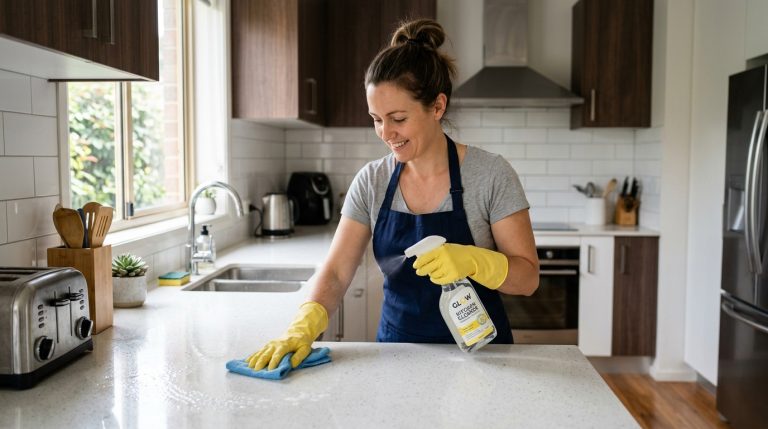
Product dwell time simply means allowing a cleaning solution to sit on a surface for the amount of time recommended by the manufacturer before wiping it away. This waiting period allows the product’s ingredients to fully break down dirt, grease, bacteria, soap scum, or mineral deposits.
Many cleaners spray and immediately wipe, assuming the product works instantly. In reality, most cleaning solutions are designed to work gradually. Just like letting laundry detergent soak into stains, cleaning products need time to dissolve grime and disinfect surfaces effectively.
Skipping dwell time can result in:
In short, rushing the process often creates more work in the long run.
Different types of messes require different amounts of time for cleaning solutions to work properly.
Kitchen grease: Degreasers need time to penetrate oils that cling to stovetops, backsplashes, and range hoods.
Bathroom soap scum: Soap residue bonds tightly to surfaces like tile, glass, and tubs. Allowing cleaner to sit helps loosen the film so it wipes away easily.
Disinfecting surfaces: Many disinfectants require several minutes of dwell time to properly kill bacteria and viruses. Wiping too soon may not fully sanitize the surface.
Hard water buildup: Mineral deposits often require longer dwell times to dissolve effectively.
When dwell time is respected, surfaces not only look cleaner — they actually stay cleaner longer.
If you’ve ever cleaned thoroughly but still felt like your home didn’t look or smell as fresh as expected, dwell time may be the missing piece. When products are wiped away too quickly, residue can remain behind, leading to dull surfaces or rapid re-soiling.
For more insight into why results sometimes fall short even when you put in effort, see Why Your Home Still Feels Dirty After You Clean It.
Professional cleaners rarely stand still waiting for a product to work. Instead, they apply cleaner to one area, move on to another task, and return once the appropriate dwell time has passed.
For example:
This workflow maximizes efficiency while improving results.
Our approach to workflow is also shaped by the flexibility and experience of independent cleaning professionals, which you can read about in Why Peoria Cleaning Pros Works Exclusively with Independent 1099 Cleaning Professionals.
Allowing proper dwell time does not necessarily mean a cleaning takes longer overall, but it does require thoughtful planning. Heavily soiled homes may need longer dwell times or repeat applications, which can influence the time needed to complete a job.
Factors like buildup level, surface type, and time required are part of What Affects the Cost of House Cleaning.
You don’t need professional tools to use dwell time effectively. A few simple habits can make a noticeable difference:
Product dwell time is one of the simplest ways to improve cleaning results without spending more money or using stronger chemicals. By allowing products to do the work they were designed to do, you can reduce scrubbing effort, improve sanitation, and enjoy a home that truly feels clean.
Sometimes the smallest adjustments produce the biggest results — and giving your cleaning products a little patience is one of the most effective techniques available.