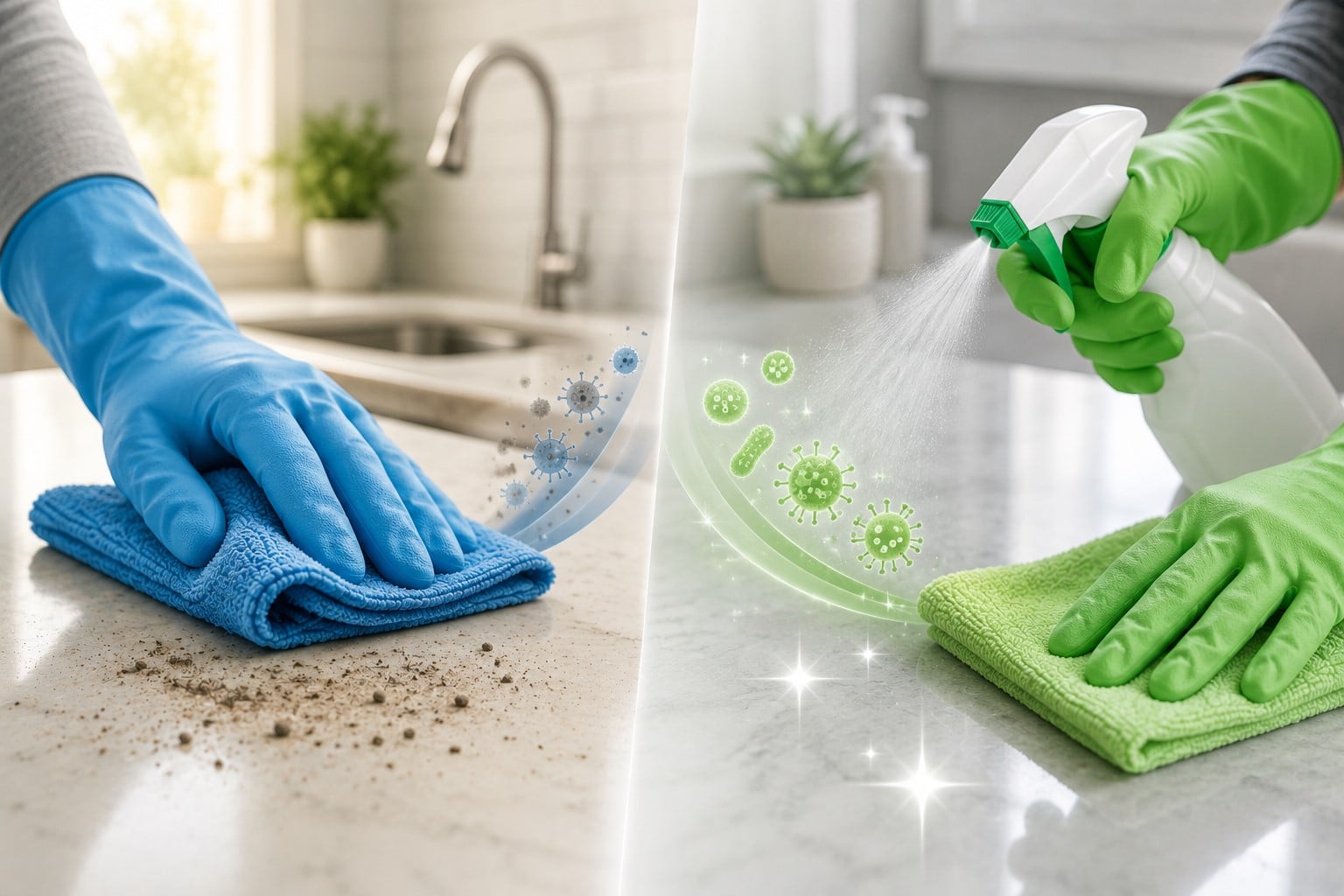
Surface Cleaning vs. True Sanitizing
A countertop can look spotless and still have germs on it. That’s because cleaning and sanitizing are not the same thing. For homeowners in Peoria, IL, understanding the difference can help you make better decisions about how you clean your home—especially in kitchens, bathrooms, and other frequently used areas.
The good news is that not every surface needs to be sanitized every time you clean. Knowing when regular surface cleaning is enough and when sanitizing makes sense can help you maintain a healthier home without overcomplicating your routine.
What Does Surface Cleaning Actually Do?
Surface cleaning is primarily about removing dirt, dust, crumbs, grease, spills, pet hair, and other debris. Depending on the surface, this might involve dusting, wiping with an all-purpose cleaner, scrubbing with soap and water, or vacuuming.
Regular cleaning also removes many germs simply by physically lifting them from the surface. For much of your everyday household cleaning, this is exactly what you need.
Think about coffee tables, shelves, baseboards, cabinet fronts, and many other household surfaces. Unless there’s a specific reason to sanitize them, thorough cleaning is generally the priority.
What Makes Sanitizing Different?
Sanitizing goes a step beyond removing visible dirt. A sanitizer is designed to reduce the number of germs on a surface to safer levels when it is used according to the product’s directions.
That last part is important.
Many homeowners spray a disinfecting or sanitizing product and immediately wipe it away. However, these products often need to remain visibly wet for a certain amount of time—sometimes called contact time or dwell time—to work as intended. The required time varies by product, so checking the label matters.
And before sanitizing, you may need to clean the surface first. Dirt, grease, and food residue can interfere with how effectively a sanitizing product works.
Which Areas Deserve Extra Attention?
You don’t necessarily need to sanitize every inch of your home. Instead, concentrate on surfaces where germs are more likely to spread.
In a typical Peoria household, that may include doorknobs, light switches, faucet handles, appliance handles, bathroom fixtures, and frequently used kitchen surfaces. Our guide to properly cleaning high-touch surfaces explains why these areas deserve more attention and how to approach them effectively.
Sanitizing can be particularly useful when someone in the household has been sick, when preparing food, or when a surface has been exposed to something that creates a higher risk of contamination.
A Cleaner Home Is About More Than Germs
It’s also important not to focus so heavily on sanitizing that you overlook other factors that affect the cleanliness of your home.
Dust, pollen, pet dander, and other particles may have more impact on everyday comfort than germs on many household surfaces. If someone in your home struggles with seasonal sensitivities, our article on cleaning for allergy relief covers the areas and cleaning habits that can make the biggest difference.
This is why a well-rounded cleaning routine matters. Dusting, vacuuming, mopping, cleaning buildup, and paying attention to frequently touched surfaces all play different roles.
Clean First, Sanitize When It Makes Sense
The goal isn’t to turn your home into a sterile environment. It’s to use the right cleaning method for the situation.
For routine housekeeping, consistent and thorough surface cleaning is the foundation. When circumstances call for additional germ reduction, proper sanitizing can be added where it matters most.
If you’re considering professional help with maintaining your home, you can also review the different cleaning services available to better understand the type of cleaning that fits your needs.
At Peoria Cleaning Pros, we believe homeowners benefit from understanding what cleaning products and methods actually accomplish. A surface that looks clean is a great start—but knowing the difference between cleaning and sanitizing helps you make smarter choices about where your time and effort are best spent.