The Role of Disinfection in Commercial Spaces
Keeping a commercial space clean is about more than making a good first impression. In offices, retail spaces, medical facilities, gyms, and other businesses throughout Peoria, IL, regular cleaning also helps create a healthier and more comfortable environment for employees, customers, and visitors.
But cleaning, sanitizing, and disinfecting aren’t exactly the same thing. Understanding the role each one plays can help businesses maintain their spaces without overcomplicating their cleaning routine.
Cleaning Comes First
One of the biggest misconceptions about disinfection is that it replaces regular cleaning. It doesn’t.
Cleaning physically removes dirt, dust, spills, grease, and many germs from surfaces. Disinfecting uses a product designed to kill certain germs that remain on a surface. In most situations, a surface should be properly cleaned before it is disinfected.
This distinction matters because a surface can look clean without necessarily being sanitary. Our guide to surface cleaning vs. true sanitizing explains why appearance alone doesn’t always tell the whole story.
Where Does Disinfection Matter Most?
Not every surface in a commercial building needs to be disinfected every time it is cleaned. The focus should generally be on high-touch areas and spaces where germs are more likely to spread.
Common high-touch surfaces include:
-
Door handles and push plates
-
Light switches
-
Shared phones and office equipment
-
Break room counters and appliance handles
-
Restroom fixtures
-
Faucet handles
-
Tables and other frequently touched work surfaces
The needs of the building matter, too. A busy gym, daycare, medical office, or customer-facing business may have different disinfection needs than a small office with only a handful of employees.
Proper Disinfection Takes More Than a Quick Spray
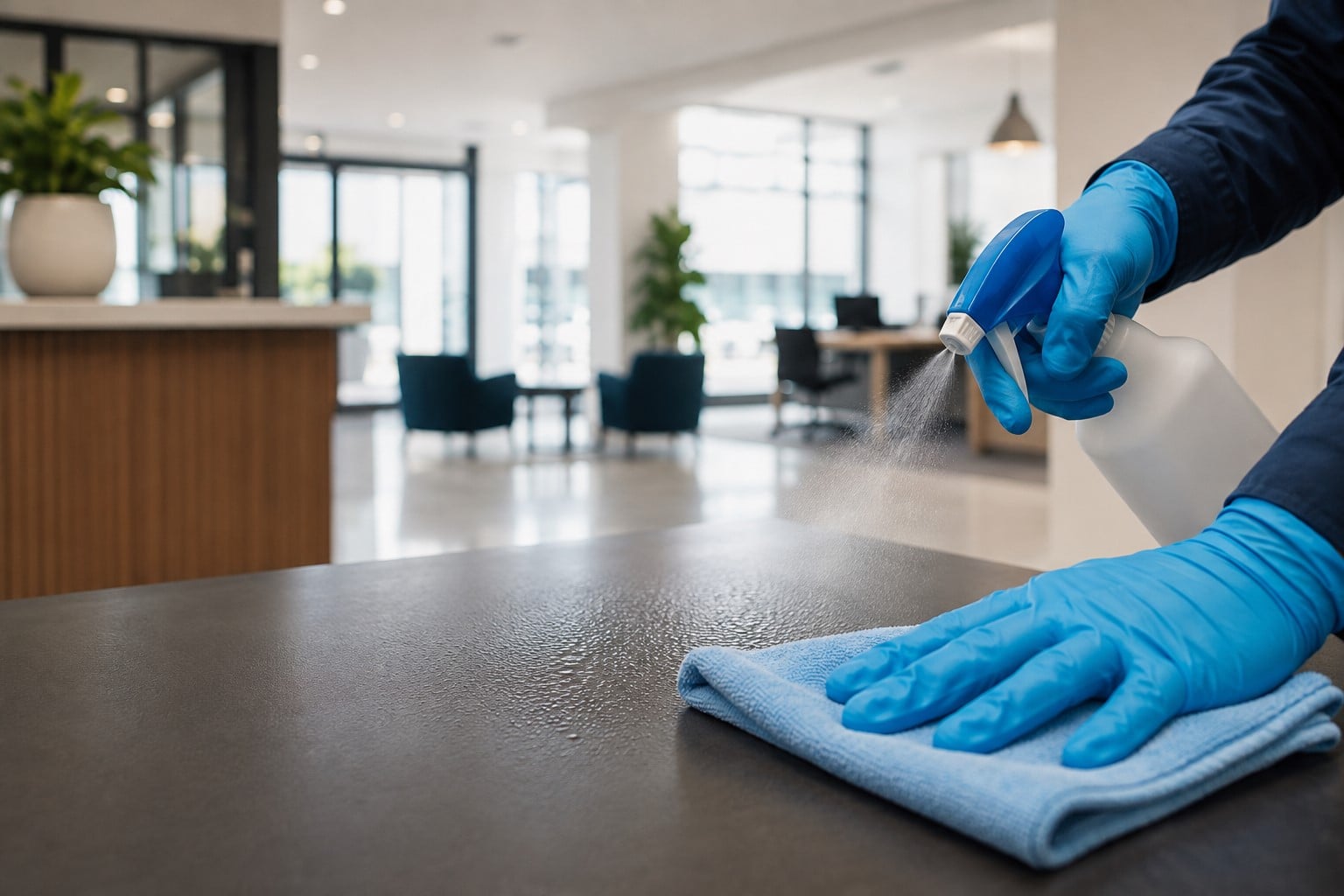
Disinfectants need to be used according to their product directions. Many require the surface to remain visibly wet for a specific amount of time, often referred to as contact or dwell time.
Simply spraying a disinfectant and immediately wiping it away may not give the product enough time to work as intended. Using the correct product for the surface is also important, since some disinfectants can damage certain finishes or materials when used incorrectly.
This is one reason commercial cleaning should be approached with a plan rather than treating every surface the same way.
A Cleaner Workplace Has Benefits Beyond Germ Control
A thoughtful commercial cleaning routine can also affect how a workplace feels and functions. Employees tend to notice when common areas, restrooms, break rooms, and workspaces are consistently maintained.
There is also a connection between the condition of the workplace and the way people work in it. We discuss some of those benefits in why clean workspaces improve productivity, including how a cleaner, more organized environment can reduce distractions and create a more pleasant place to work.
For Peoria businesses, the goal shouldn’t necessarily be to disinfect everything constantly. Instead, it’s about combining routine cleaning with targeted sanitizing or disinfection where it makes sense.
Building the Right Cleaning Routine
Every commercial property is different. The right cleaning schedule depends on factors such as foot traffic, number of employees, type of business, shared spaces, and how frequently different surfaces are touched.
A professional commercial cleaning plan can account for those differences while making sure routine cleaning and higher-priority areas receive the appropriate attention. You can learn more about the different cleaning services available for businesses and other properties.
At Peoria Cleaning Pros, we believe effective cleaning starts with understanding what a space actually needs. Disinfection can be an important part of commercial cleaning, but it works best as part of a thoughtful overall routine—one that keeps the workplace clean, welcoming, and ready for the people who use it every day.